Guide for First Time Game Masters Part 1, Understanding Your Players
A TableTop RolePlaying Game (TTPRG) is a narrative-driven storytelling game that revolves around a group of players who all play characters they have created. The rules of the TTRPG chiefly govern how players can affect the world around them, and how characters accomplish their goals.
The world around these characters is crafted by the arbiter of the game, the Game Master. They describe initial conditions, play any Non-Player Characters (NPC), manage combat, and detail the consequences of players’ actions. Having to create an entire world and decide “What happens next” makes being a Game Master the most critical role for the success of a game, and also the hardest to pull off. Thus, taking on the role of the Game Master can feel daunting.
This is a detailed guide on how to approach running your first TTRPG as a Game Master. Using one of the most popular TTRPGs on the market, Dungeons and Dragons, as an example, I will advise on what information you need to have before you start to prepare a successful adventure, how to prepare your game to its fullest while leaving room for your players’ creativity, and how to conduct your players through the story you have crafted.
The final goal of any TTRPG is that everyone at the table, including the Game Master, has fun. These guidelines and ideas will support you in facilitating an experience that both you and your players will enjoy, leaving both sides hungry for more. Following these guidelines will instill you with some good Game Master habits and provide skills to build on for your future games.
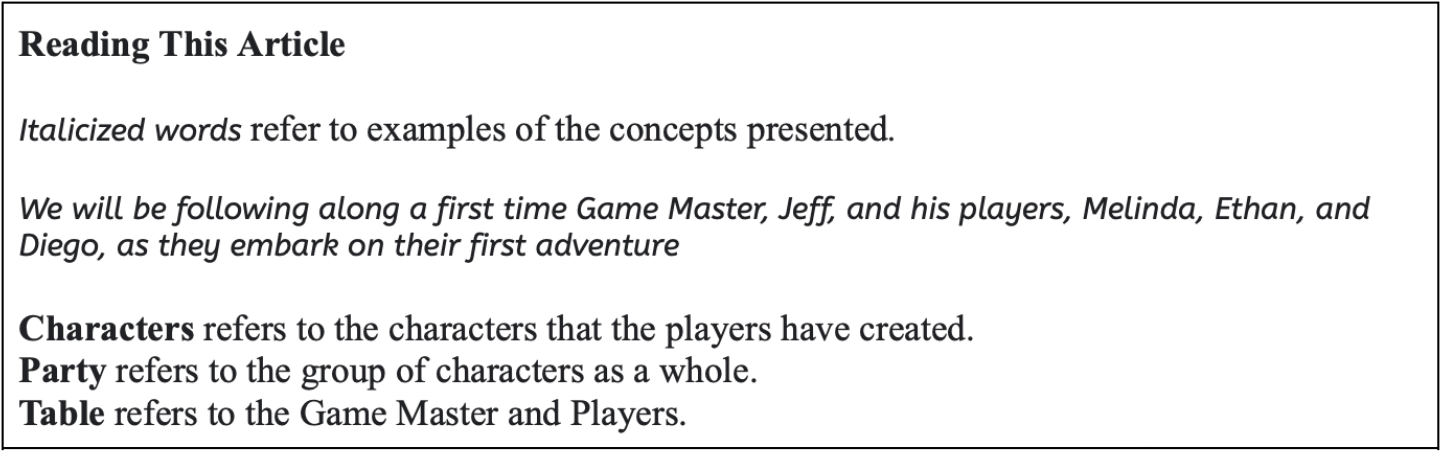
A TTPRG adventure is largely shaped by the players themselves. You players are not only your audience, but they are your co-storytellers. Therefore, understanding the people you are playing with and catering to as a Game Master is the first step in preparing your game.
Your Players’ Tastes
Before beginning a game, it is important that the Game Master and players be on the same page about what sort of adventure the player characters will be embarking on. A good Game Master seeks to align the game with the players’ tastes and expectations. After all, if the players come to the table expecting a game about thrilling combat and perilous chases, they will hardly be thrilled if they are asked to sit through 4 hours of dense political intrigue.
The best way to accomplish this is to directly ask your players what kind of game they would like to play, and seek to build the narrative around these preferences. Some questions you can ask to spark discussion about this include:
“How do you want your characters to accomplish their goals?”
- The actions that the characters take tend to take the spotlight. Understanding what the players actually want to do in the gameworld is important information as you formulate a narrative for them to experience.
“What era, genre, or aesthetic would you like the game to take place in?”
- This will not only inform the visual color of your game world, but allows you to borrow from existing tropes within those settings and genres. If your players want to play in a film noir setting, this tells you that your players would most likely enjoy solving mysteries, and that you should give them this opportunity during your game.
Coming to the table, Game Master Jeff asks his players Melinda, Ethan, and Diego how they want their characters to accomplish their goals. Melinda states that she wants to destroy her enemies in dense, tactical combat. Ethan states that he enjoys learning the stories of characters and interacting with them, and Diego states that he enjoys piecing together mysteries, putting together clues to find an overarching event.
Jeff then asks if there are any genres that they would like to live in, and they state that they would like a story of apocalyptic survival, where crushing odds are ultimately met with hope for a better future. This gives Jeff some pointers, and puts him in the correct frame of mind when writing his story.
Your Players’ Comfort Zones
Before going off to write your adventure based on your players’ preferences, you need to understand their comfort zones. Role-playing can be a vulnerable experience, and it is important to ensure that everyone at the table feels comfortable with the situations their characters are liable to get into. Even if your players are self-proclaimed lovers of guts and gore, situations can quickly escalate. So, it is important to establish clear boundaries.
Various safety tools and techniques exist to accomplish boundaries, but the simplest and most effective is simply to ask you players if there is anything that might come up that they would feel uncomfortable with before the game. This can be imagery they would find particularly upsetting or themes they would rather not discuss. You should let the players know that you are happy to discuss potential triggers privately and encourage them to send you a private note before or during the campaign if they have any concerns or questions.
Ethan states that he would rather not have very graphic descriptions of corpses. This means that Jeff’s original idea, a zombie apocalypse, is going to be very difficult to pull off. Jeff scraps the idea, looking for a different kind of apocalypse. He settles on an unknown disaster which has left the world covered in deserts and which has turned forests into putrid bogs.
As your players give suggestions and contribute to the game, they become more emotionally invested, helping to shape an experience that will start your TTRPG journey on the right foot.